
Airports
Airport Hood Cleaning Near Me
Airport hood cleaning protects travelers, employees, and aviation infrastructure from fire hazards that originate in commercial kitchens. Every food court, restaurant, and catering facility within an airport terminal operates under strict fire codes and health regulations. Grease accumulation in exhaust systems creates conditions for destructive fires that can shut down terminal operations and endanger lives.
Top Hood Cleaners provides comprehensive airport hood cleaning throughout Detroit, Michigan, and the surrounding metro area. Call 313-209-8205 to schedule service.
Why Airport Kitchens Face Unique Cleaning Challenges
Airport food service operations differ from standalone restaurants in critical ways. Multiple vendors share common exhaust systems. Kitchens operate extended hours to serve early morning and late-night flights. High passenger volume means constant cooking that produces more grease than typical restaurants.
The National Fire Protection Association reports that failure to clean commercial cooking equipment causes 61% of restaurant fires. Airport terminals cannot afford this risk. A single kitchen fire can force terminal evacuations, cancel flights, and create liability issues that span multiple tenants.
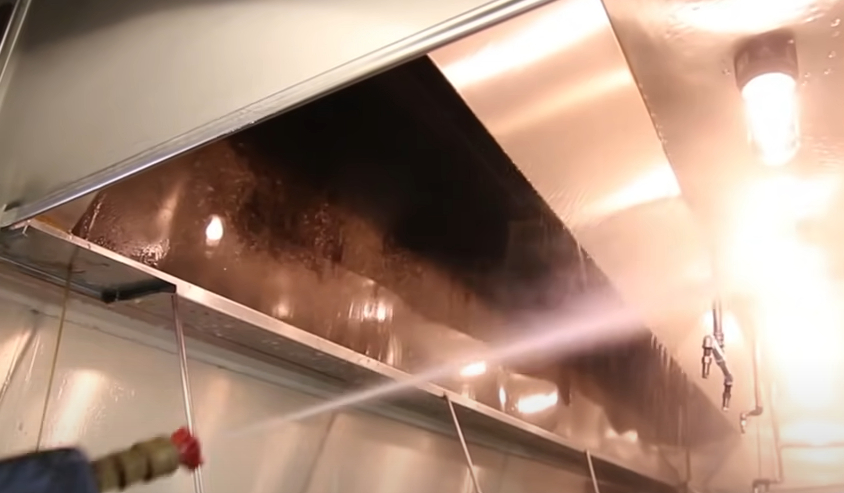
Airport restaurant hood cleaning addresses these elevated risks through systematic grease removal from exhaust hoods, ductwork, and rooftop fans. Professional cleaning prevents the buildup that fuels flash fires and ensures compliance with aviation facility standards.
Fire Codes and Compliance Standards for Aviation Facilities
Airport kitchens must meet both local fire codes and Federal Aviation Administration regulations. NFPA 96 establishes the Standard for Ventilation Control and Fire Protection of Commercial Cooking Operations. This standard requires regular inspection and cleaning based on cooking volume.
Health departments in Michigan enforce additional requirements. The Michigan Department of Agriculture and Rural Development oversees food service sanitation. Local jurisdictions add their own rules. Wayne County and Oakland County health departments conduct regular inspections.
Cleaning frequency depends on cooking type:
- Solid fuel cooking requires monthly cleaning
- High-volume operations need quarterly service
- Moderate-volume kitchens require semi-annual cleaning
- Low-volume or seasonal facilities need annual service
Airport food court cleaning often requires quarterly service due to continuous operations and grease production from multiple vendors.
How Airport Hood Cleaning Differs From Standard Restaurant Service
Commercial hood cleaning for airports involves coordination that standalone restaurants never face. Cleaning crews must pass security clearances. Work schedules must avoid disrupting passenger services. Multiple tenants share exhaust systems, requiring simultaneous coordination.
Rooftop access at airports requires special authorization. Exhaust fans sit on terminal roofs alongside critical aviation equipment. Cleaning contractors need clearance to work near radar systems, communication arrays, and navigational equipment.
Airport exhaust hood cleaning also addresses shared ductwork. When multiple restaurants connect to common exhaust systems, contamination spreads between tenants. One non-compliant kitchen creates fire risk for all connected operations.
Scheduling Service Without Disrupting Airport Operations
Most airport kitchen exhaust cleaning occurs during overnight hours. Terminals never close completely, but passenger traffic drops between midnight and 5 AM. This window allows thorough cleaning without interrupting meal service or creating safety concerns in public areas.
After-hours cleaning requires careful planning. Cleaning crews coordinate with airport security. Equipment and vehicles need pre-approval. Work areas require barriers to separate cleaning operations from public spaces.
Some airports schedule cleaning during terminal renovations or seasonal maintenance periods. Others rotate service among tenants to avoid simultaneous shutdowns. Top Hood Cleaners works with facility managers to develop schedules that maintain compliance without disrupting operations.
Types of Airport Facilities Requiring Exhaust System Maintenance
Airport hood cleaning extends beyond restaurants and food courts. These facilities require regular service:
- Full-service restaurants in terminals
- Fast food outlets and quick-service chains
- Coffee shops with cooking equipment
- Airport lounges with food preparation areas
- Catering facilities that prepare in-flight meals
- Employee cafeterias and break rooms
- VIP dining areas and private clubs
Each facility type produces different grease levels. Catering operations that prepare thousands of meals daily need more frequent cleaning than coffee shops that only operate grills and toasters.
Fire Risk Reduction Through Professional Cleaning
Grease fires in airport kitchens spread rapidly through connected exhaust systems. Flames travel through ductwork and ignite accumulated grease on rooftop fans. The resulting fires can damage terminal structures and force evacuations.
Aviation facility hood cleaning removes the fuel source for these fires. Professional technicians scrape grease from hood interiors, clean ductwork from access panels, and degrease exhaust fans. They document grease thickness and cleaning dates.
This documentation proves compliance during inspections and provides legal protection if incidents occur.
Managing Tenant Compliance Across Multiple Vendors
Airport operators face the challenge of ensuring all food service tenants maintain clean exhaust systems. Lease agreements should specify cleaning requirements and documentation standards. Facility managers need systems to track when each tenant last received service.
Some airports require proof of cleaning before renewing food service leases. Others conduct quarterly audits of all kitchen exhaust systems. The most effective approach combines lease requirements with regular inspections.
Top Hood Cleaners provides detailed service reports that satisfy inspection requirements. These reports include before and after photos, grease measurements, and certification that work meets NFPA 96 standards.
Protecting Your Aviation Facility Investment
Airport fire code compliant hood cleaning protects property values and operational continuity. Regular maintenance prevents the accumulation that leads to expensive emergency cleaning or fire damage repairs.
Terminal operators throughout Detroit, Michigan, trust Top Hood Cleaners for airport grease exhaust cleaning that meets all regulatory requirements. Our technicians carry proper clearances and understand the unique demands of aviation facilities.
Contact Top Hood Cleaners at 313-209-8205 to schedule airport kitchen exhaust cleaning services. We provide the documentation and service quality that airports require to maintain safe, compliant food service operations.